
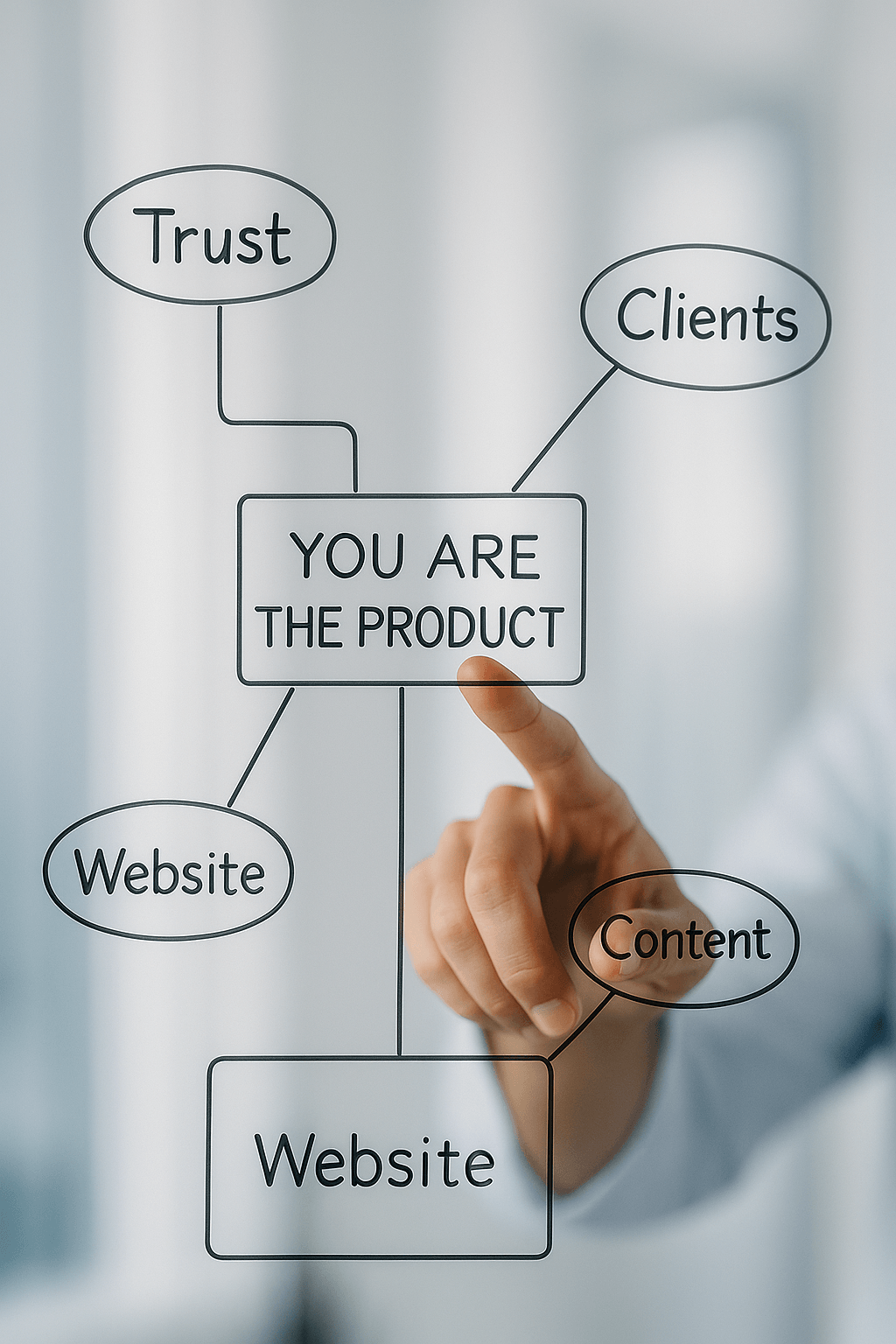
When you’re in a service-based business, you are the product.
Your reputation, expertise, and ability to solve real problems are what people buy — and digital marketing is how you scale that trust.
But between managing clients, delivering results, and building your business, it’s easy to let marketing fall to the back burner. The challenge? Without visibility, even the best service providers stay hidden.
Let’s explore how digital marketing can help you attract, nurture, and convert the right clients — without adding chaos to your calendar.
1. Lead with Clarity, Not Complexity
Before launching ads or writing posts, get clear on your message.
Ask yourself:
- What specific problem do I solve for my ideal client?
- What results do I consistently deliver?
- What proof can I share?
In service businesses, your marketing should read like a conversation with your best-fit client. Skip jargon and focus on outcomes. People don’t buy coaching — they buy confidence, clarity, and traction.
Clarity drives conversion. Confusion kills it.
2. Your Website: A Digital Office That Works 24/7
Think of your website as your top salesperson — the one who’s always available, always professional, and always on message.
A strong service-based website includes:
- A clear statement of what you do and who you serve
- Case studies or testimonials that build trust
- A simple call to action (“Book a Consultation” or “Schedule a Discovery Call”)
- A way to capture leads (like a downloadable guide or quiz)
You don’t need a fancy site. You need a focused one that turns curiosity into connection.
3. Use Content to Educate and Elevate
In the service world, authority sells. Clients want to know you understand their pain points — and have solved them before.
That’s where content comes in:
- Write blogs that answer the exact questions your clients ask in meetings
- Share short videos that break down complex topics
- Offer free resources that help people take their next small step
When your content educates, it builds credibility — and makes prospects more likely to reach out when they’re ready for the full solution.
4. Show Up Where the Decision Makers Are
For service-based businesses, LinkedIn is your power platform.
This is where your audience — CEOs, integrators, operations leaders, and entrepreneurs — are already having growth conversations.
A few ways to show up:
- Share a short client success story once a week
- Post a helpful tip that connects back to your expertise
- Comment thoughtfully on industry posts to increase visibility
It’s not about going viral — it’s about being visible to the right people.
5. Build an Email List You Actually Use
Social media is rented land. Your email list is your owned audience.
Even a small list of 100 engaged contacts can outperform thousands of followers if nurtured well.
Try a monthly newsletter that includes:
- A story about a client win (anonymized if needed)
- A simple, actionable tip
- A link to book a consultation or attend your next event
Consistency builds trust — and trust converts.
6. Track What Matters
Don’t get lost in vanity metrics like “likes” and “followers.” Instead, track what truly moves your business forward:
- Leads generated per month
- Conversion rate (how many consultations turn into clients)
- Email open rates
- Website traffic growth
These metrics tell you what’s working — and what’s just noise.
7. Keep It Human
The best digital marketing doesn’t feel like marketing. It feels like connection.
Share your perspective. Tell stories. Let your audience see the human side of your brand. Whether it’s through video, writing, or events — let your authenticity be your differentiator.
Because in service-based businesses, people don’t just buy results — they buy relationships.
Ready to Scale with Simplicity?
At Outpace, we help leadership teams and service-based businesses create systems that drive growth without burnout.
If your digital marketing feels scattered , or you’re ready to turn awareness into action , let’s talk about how to align your message, systems, and strategy for real traction.