“In many organizations, the lowest-paid employees are the receptionists, customer service staff, and front-line people—the very people who interact … with the customer. They are, in short, the most important people in the organization.”
— Don Rheen (2018)
If you’re running a growing business, it’s easy to get pulled into strategy, vision, and top-level problem-solving. But here’s the truth: the real insight into your company’s health isn’t at the top—it’s at the front line.
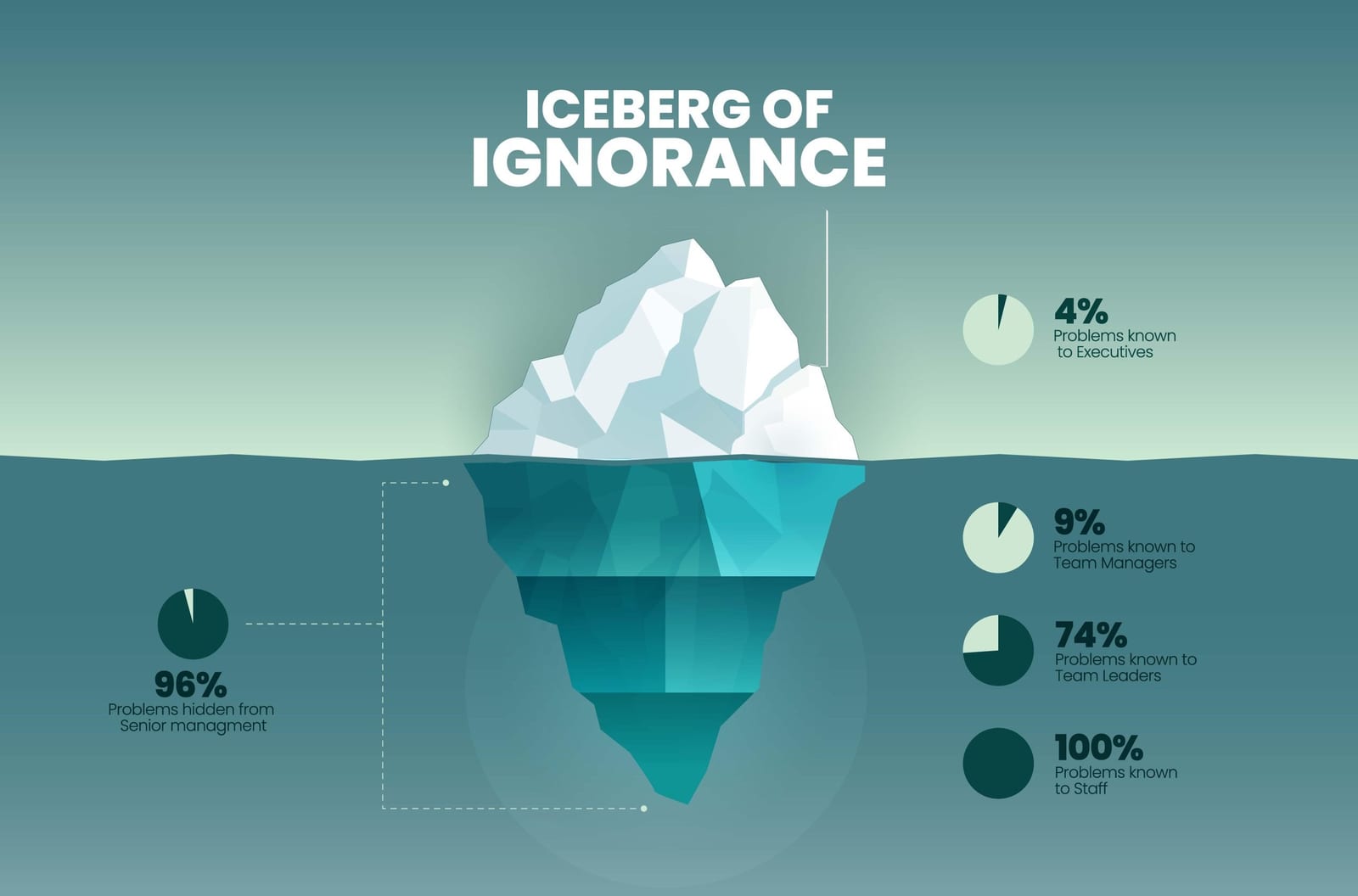
This idea is powerfully illustrated by what’s known as the Iceberg of Ignorance.
The Iceberg of Ignorance
A study by Sidney Yoshida found that:
- 100% of problems are known to front-line employees
- 74% to supervisors
- 9% to middle management
- Only 4% reach senior leadership
That means most leadership teams are operating with only a fraction of the real picture while the answers sit quietly at the edge of the organization, with the people closest to your customer.
So, How Do You Flip the Iceberg?
Flipping the iceberg doesn’t mean flipping the org chart. You don’t hand over decision-making to your most junior team members. Instead, it’s about removing the blind spots, building a culture where feedback travels up, not just down.
The best companies don’t just rely on hierarchy. They build feedback loops that connect every level of the organization and allow their people to speak up without fear.
That’s how you go from guessing to knowing.
What This Means for Leadership Teams
If you’re leading a business, ask yourself:
- Are we creating space for front-line feedback in our weekly meetings?
- Do our processes encourage upward communication—or silence?
- Are our core values showing up at every level, or just in leadership retreats?
In EOS®, we talk about strengthening the People Component and the Process Component. Flipping the iceberg lives at the intersection of both. You need the right people in the right seats and simple, clear ways to elevate what they’re seeing every day.
Keep the Hierarchy. Stop Acting Hierarchically.
Hierarchies serve a purpose. They create clarity, accountability, and speed. But when leadership teams act as if all insight comes from the top, they miss out on their greatest asset: the people closest to the customer.
Want to build a stronger, more responsive team culture? Start listening more deeply to the voices on the ground and use the EOS tools to bring their insight to the surface.
Because the health of your business isn’t just at the top, it’s embedded in every interaction your team has with your customers.